


Udemy - Online Courses
4.415.11K Reviews
App Specs
- Version
- 9.70.0
- Updated On
- License
- Free
- Downloads
- 10,000,000+
- Developer
- Udemy
- Categories
- Education
- Platform
- Android, iOS
Screenshots

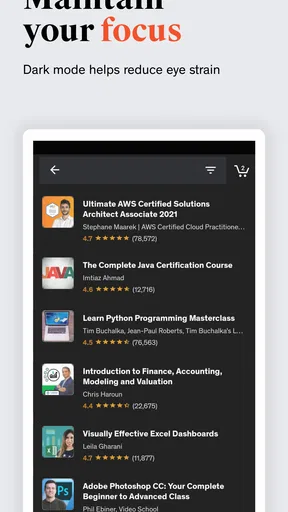
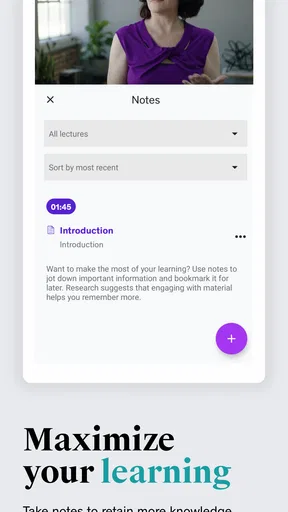

 Analysis by AppCompare
I like learning apps best when they help me turn a vague intention into a practical next step. Udemy is built around choosing individual online courses, so I can look for a focused lesson path instead of committing to a live timetable. That makes it useful for exploring subjects such as coding or AI, but the size of the catalog also means I need to choose carefully rather than assume every course will suit me.
Where it fits in a learning routine
For me, the app works best when I arrive with a clear question: how do I understand a particular tool, practise a work task, or try a new hobby? Browsing without a goal can be entertaining, but it is easy to keep comparing options and never begin. I get more value by writing down what I want to be able to do, then checking whether a course actually addresses that outcome.
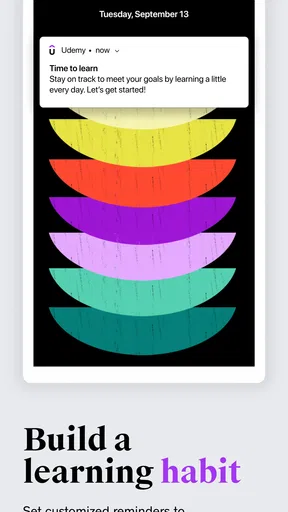
A realistic use might be opening a lesson during a lunch break, noting one unfamiliar term, and returning later to practise it at a desk. Short sessions can make a self-paced course easier to fit around work or family commitments. They do not, by themselves, guarantee progress; I still need to apply what I watched, especially for practical subjects.
Choosing a course with care
The main decision is not simply which subject to study, but which instructor and teaching approach make sense for me. I compare course descriptions with my goal, read a sample of learner feedback, and look for evidence that the lessons cover the level I need. Reviews can flag useful strengths or frustrations, but they are opinions from other learners, not a promise that I will have the same experience.
I also try to avoid buying several courses that appear to solve the same problem. A better workflow is to select one plausible option, work through enough of it to judge the pace and explanations, and only then decide whether I need another perspective. This matters most when I am learning a skill that depends on practice: more videos are not automatically better than time spent doing the task myself.
How it compares with other ways to learn
Compared with a live online class, Udemy’s self-paced format gives me more control over when I study, but less of the real-time back-and-forth that can make a difficult idea click. Compared with free video tutorials scattered across the web, courses offer a more organized route through a subject, although the quality and depth can vary from one course to another. If I need direct feedback, a fixed schedule, or an instructor to assess my work, a live class, mentor, or structured program may be a better fit.
It is also different from treating a search engine as a teacher. A course can help me follow a sequence rather than jump between unrelated explanations, but I still need to check whether its material matches my current software, goals, and experience. For fast-changing topics such as AI, I would pay particular attention to when lessons were made and whether the examples still make sense before relying on them for a work decision.
Worth Reading Before You Choose

EA SPORTS FC Mobile 26 Is a Bigger Football Game, but It Takes Time

Flipboard Shows What News Apps Must Do Beyond the Feed

Switching to Android Auto Means Rethinking Your Driving Routine

Google Calendar Makes a Crowded Week Easier to Manage

Ludo King Makes the Most of the Minutes Between Plans

Baby Panda World Brings Quick Play to Modern Phones, but Its Game Library Feels Busy
Who is likely to get the most from it
I would recommend trying it if you are comfortable learning independently and want to explore a specific skill without fitting your week around class times. It can suit a beginner who wants a guided starting point, or someone experienced who needs a targeted refresher. People who learn best through discussion, external deadlines, or hands-on coaching may find the format less satisfying unless a course’s own materials provide enough structure and practice.
It is less suitable when the stakes are high and you need formal instruction, verified assessment, or a credential that an employer or institution explicitly requires. Before relying on any online course for that purpose, I would check the requirements of the organization involved. The app is a route to learning material, not a substitute for confirming that a particular qualification will be recognized.
At the time of writing, the app is free to install and is developed by Udemy. Its average rating is 4.4 from around 503,000 ratings, and it has passed 10 million installs. It is rated for everyone, while individual course purchases and in-app purchases can involve separate costs. I treat those figures as useful context, not proof that a particular course is right for me.
The current version is 9.57.2, and the app’s release goes back to January 14, 2014. Those details show that this is an established learning app with a current version, but they do not tell me that every course has been refreshed or that every lesson uses the same format. I would judge the learning material course by course, especially when the subject changes quickly.
What to watch for as you learn
Before starting, I decide how I will tell whether a course is helping. For a technical topic, that might mean completing a small exercise without following the instructor step by step. For a creative subject, it could be making something of my own using one technique from a lesson. This simple check keeps passive watching from feeling like progress when I have not yet learned to use the material.
I also make a note of questions while watching rather than pausing to search every unfamiliar phrase. That preserves the flow of a lesson; afterward I can see which questions are answered later and which need follow-up. If the course offers quizzes or downloadable material, I use those as a way to test recall or practise, not as a substitute for checking whether I can apply the idea independently.
The app’s Education focus is reflected in a broad course marketplace rather than a single fixed curriculum. That breadth is a strength when I want to move between topics, but it also puts more responsibility on me to assess relevance and quality. The developer’s name is Udemy, and the app has a substantial audience, yet popularity alone cannot tell me whether an instructor’s explanations fit my level or whether the course is current enough for my needs.
For people wondering whether they can just browse before committing, the app is free to install, and course purchases are a separate consideration. I would check the course’s own details and the purchase screen before paying, rather than assume the whole catalog is included at no cost. The listed in-app purchase range runs from $0.99 to $239.99 per item, so the amount depends on what is being purchased; I would not treat one course’s price as representative of all the others.
Discovering a World of Knowledge
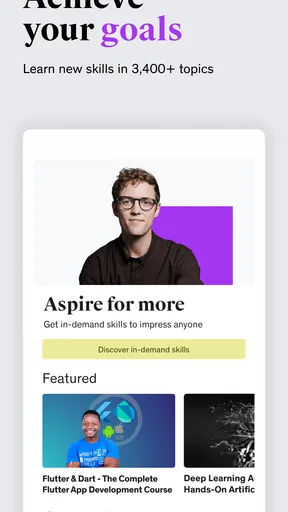
Alright, let’s talk about the first impression. When I opened Udemy, I was blown away by the sheer number of courses available. We’re talking thousands of options across a myriad of subjects. Whether you’re into coding, photography, or even something niche like bread-making, there's something for you. It's like a candy store for the curious mind!
Getting Started
Signing up was a breeze. Just a few clicks, and I was in. The app’s interface is pretty intuitive, which is great if you're not tech-savvy. You can easily browse courses by category, check out trending topics, or search for something specific. I ended up browsing for hours just because there were so many cool things to learn.
Course Variety and Quality
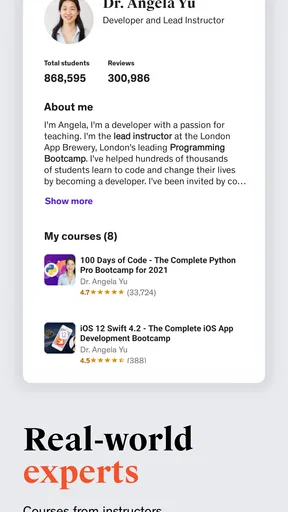
One thing I noticed is the variety in course quality. While some courses are top-notch, taught by industry professionals, others can be a bit hit-or-miss. Thankfully, the reviews and ratings from other users are super helpful. I always make sure to read a few before enrolling. It’s like having a friend give you the lowdown before you dive in.
The video quality is generally solid, and I appreciate the transcripts and additional resources provided. It’s these little extras that make a big difference when you're trying to absorb new information.
Learning at Your Own Pace
One of the biggest perks here is the flexibility. Courses are self-paced, meaning you can take them whenever you want. Got a busy schedule? No problem. You can watch the videos on your commute, during lunch breaks, or even in bed. This kind of freedom is a game-changer for lifelong learners.
Plus, once you’ve purchased a course, it’s yours forever. So, you can revisit lessons whenever you need a refresher. It’s like having a personal tutor on standby 24/7.
Interactivity and Community
While Udemy isn’t the most interactive platform out there, it does have a Q&A section for each course where you can ask questions and interact with instructors. It’s not quite like a live class, but it’s a nice touch if you have specific queries.
I also noticed that some instructors offer downloadable resources and quizzes to test your knowledge, which I found super helpful. It's these interactive elements that enhance the learning experience.
Pricing and Deals
Now, let’s talk money. Courses on Udemy are usually quite affordable, especially when you catch them on sale. They often have massive discounts, so you can snag a course for a fraction of the original price. There’s something satisfying about getting quality education without breaking the bank.
They also have a 30-day refund policy, which is a nice safety net if you find a course isn’t quite what you expected.
Final Thoughts
So, is Udemy - Online Courses worth it? In my opinion, absolutely, especially if you love the idea of learning at your own pace in a wide range of subjects. Just remember to read the reviews and check the ratings before buying a course. That way, you ensure you're getting the best bang for your buck.
Overall, it’s an excellent tool for personal development and skill enhancement, whether you’re looking to advance your career or simply explore new hobbies. Give it a try, and happy learning!
Pros
- Extensive course variety.
- Affordable pricing options.
- Lifetime access to purchased courses.
- User-friendly interface.
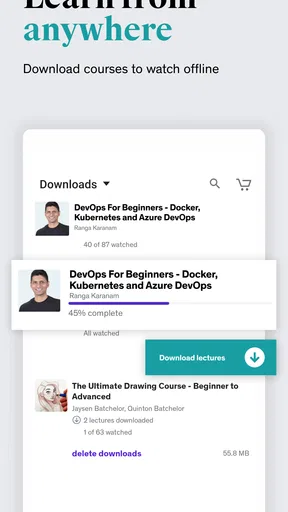
- Offline access to courses.
Cons
- Limited free course options.
- Quality varies by instructor.
- No accreditation for courses.
- No live interaction with instructors.
- Mobile app lacks some desktop features.
FAQs for Udemy - Online Courses
What types of courses are available on Udemy?
Udemy offers a diverse range of courses across various categories, including business, technology, personal development, arts, and health. Whether you’re interested in learning to code, improving your photography skills, or mastering time management, Udemy provides courses taught by industry experts. Each course is tailored to different skill levels, from beginner to advanced.
Is Udemy free to use, or do I need to pay for courses?
While Udemy itself is free to sign up for, most courses require a purchase. Prices vary depending on the course, but Udemy frequently offers discounts and sales. Additionally, there are free courses available, which can be a great way to explore new topics without any financial commitment. Always check for promotions to get the best deals.
Can I access Udemy courses offline?
Yes, Udemy allows you to download courses for offline viewing through its mobile app. This feature is particularly useful if you have a limited internet connection or wish to learn on the go. Ensure that you have the latest version of the app installed and enough storage space on your device to accommodate the downloaded content.
Do Udemy courses provide certification?
Upon completing a course on Udemy, you receive a certificate of completion. While these certificates do not hold the same weight as formal educational qualifications, they can be a valuable addition to your resume, showcasing your commitment to learning and skill development. Always check the course details to see if a certificate is offered.
How does Udemy ensure the quality of its courses?
Udemy maintains quality by allowing users to rate and review courses. This feedback system helps prospective learners determine the value of a course before enrolling. Additionally, Udemy regularly updates its platform to support content creators in delivering high-quality educational experiences. Always read reviews and check instructor credentials to ensure course quality.


